If you happen to be looking for something to watch tonight, and you’ve happened by this page for one reason or another (two unlikely happenstances), then I have just the ticket! Ladies and gentlemen, I present the first installment of Found Footage Fridays!
A preface, I love found footage films. I was the demographic for TheBlair Witch Project when it released and I have loved the genre ever since. I love it as a story telling POV or as a unique way to present an idea that is otherwise unfilmable, either due to budget constraints or an idea being too visionary (or both!), and making it work by limiting the scope of the story. We can only see what the camera sees and for that we need them to keep filming. We will talk more about the idea of KEEP FILMING in later installments of this segment. Tonight I want to focus on what the camera sees and how that can be used in truly fun and interesting ways. Tonight’s film is a mind melting masterpiece of FF from Japan that brings the cosmic horror and a sense of dread that builds all the way through the start of the end credits. The film deals with the idea of being marked by fate and posits the question, “What would you do if Fate marked you, and told you It had some truly big plans for your future?” And it uses various perspectives to explore the idea. But here, let’s ask you:
What would you do? Would you reject Fate or would you follow Fate? What if Fate was a forgotten God whispering from a different place altogether, would you want to join it? Would you fight Fate?
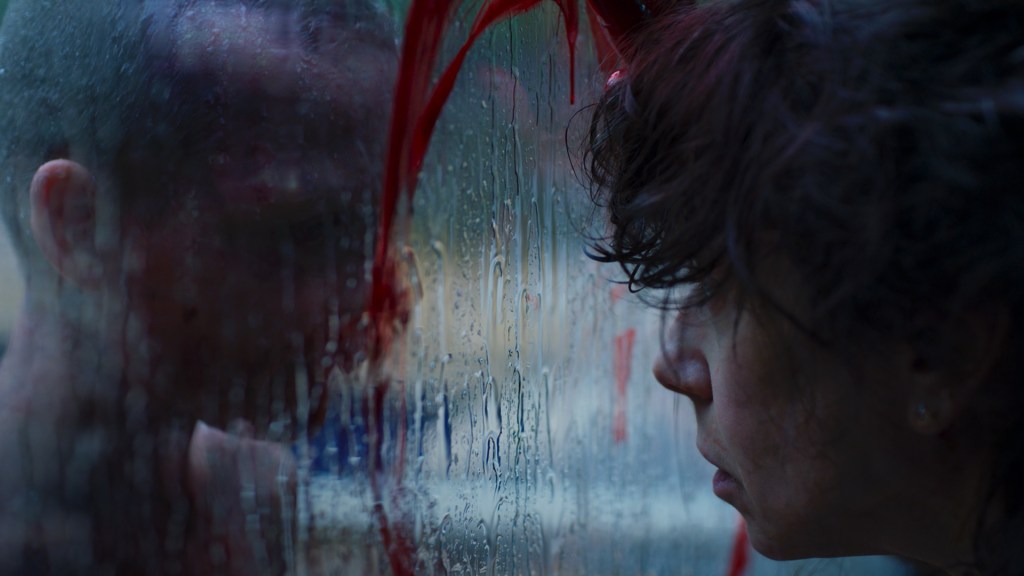
You might have answers to the questions above, but so to does the film. All of these questions and more are answered as the film plays out, starting with a vicious knife attack on a bridge and ending with an answer to all the questions above. Watch via the link below:
I tried really, really hard to like Undertone. In fact, I keep trying but no matter what I try, I just do not enjoy that film at all. I appreciate its novel approach to haunting the viewer with its incredible sound design, but I have heard podcasts that were just as affecting as the ending of Undertone and had better stories.
If you are looking for something that will absolutely blow you away, check out The Left Right Game. It is incredible.
Undertone on the other hand, is not. The acting was subpar, the spooks and gags offered by the director and production team fall flat time and again and fail to scare, and the single location they use for the shoot is unappealing. Iron Lung (made for a similar budget) absolutely used every dollar on screen. Undertone‘s budget was not utilized to a similar degree.
With Undertone, I am not sure where the disconnect for me was. The sound design really was incredible, and the ending five minutes were as intense an experience as any I have experienced in a movie theater but the rest of the film that preceded it was flat, uninspired, and almost nonsensical.
It was also narcotizing. I struggled to stay awake BOTH times I saw the film (I went back a second time to see what I missed and it turns…not much). In fact, I will probably do a follow up piece on films with great sound design that are not Undertone (i.e. good or great).
HUNTING MATTHEW NICHOLS: A DIFFERENT EXPERIENCE DRAWN FROM THE SAME WELL
In the meantime, I would like to talk about a different film that ALSO claims to follow the tradition of the Blair Witch. The film? Hunting Matthew Nichols.
The Internet provides the following plot synopsis, and it’s perfectly serviceable as an introduction to the film, so here you go: “Two decades after her brother mysteriously disappeared, a determined woman sets out to solve the case. When a disturbing piece of evidence is revealed, she starts to believe that he may still be alive.”
Let’s start with what this film is, a mostly-fun little found footage flick that tells you from the start that they are doing a Blair Witch pastiche. It then sticks to that formula by giving us two narratives to chase. The first is the disappearance of Matthew Nichols, which is the primary focus of Matthew’s sister, Tara, who is our protagonist. She is the one financing and directing this film and it is her vision that we see up to a point.
The second narrative is our narrator slowly losing control of the situation until everything spirals out of control.
We follow Tara as she goes through the usual found footage tropes: forgotten tapes belonging to the missing person, strange occult objects found among the detritus left behind in the boxes of evidence, hints at strange folklore (this time relating to First Nations mythology which I found to be a refreshing addition to the film.), all leading to the place where Matthew apparently did something incredibly horrific. I’ll give one guess as to the locale…
Did you guess “forgotten cabin in the woods that should not be there but is?” If so, you win a prize!
This movie is a solid FF entry that definitely pays homage to The Blair Witch Project while doing its own pastiche. It was entertaining and worth a gander when it comes to streaming.
So what is wrong with it? While it is a good found footage flick, it falls far short of being a GREAT found footage flick. The pastiche is too close to the source material at times and the plot does some weird contortions to get us from place to place at times. The presentation of the documentary as a slick production (think Hulu or Netflix style) also hurts the idea that this is a found footage flick. Not that high production value is a bad thing! It works for other FF flicks (see: Strange Harvest) but here, where the idea is that what we are watching is also an unfinished project where the film crew met an ambiguous and potentially horrific end, it gives the film a sense of wrongness that is more bug than feature. Also this gloss adds too much to the film in a bad way as it makes the film feel so much longer than it actually
So which should you choose if you had to pick one to watch today? I would take Hunting Matthew Nichols over Undertone any time. Both films fall victim to the contortions necessary to make a found footage flick work and both, at times, have successes with their respective presentations but the overall story and lore given to us in HMN is far more cohesive, coherent, and fascinating. The endings of each film are both batshit but I felt that HMN’s was more earned and made far more sense, especially the final shout out to the Blair Witch that they managed to slip in. Undertone’s ending was more intense, but less coherent in a lot of ways.
So enjoy what these two are offering, and I will return soon with some films in the same vein that are far superior or more enjoyable as I institute FOUND FOOTAGE FRIDAYS. Coming soon to A Horror Blog!
Faces of Death arrived to much fanfare from horror movie sites and much confusion from normal movie goers, reflected in the film’s poor box office performance. A friend of mine wondered why they would re-release the film after all these years and then, after reading the plot synopsis, asked, “Why?”
I understand that reaction and I understand why the filmmakers decided to requel (thanks SCREAM for that term) this film series (yes, there were more than one! There were 6, with the most recent one I can remember coming out in 1996. These films and the Guinea Pig series from Japan (and also the American versions) were some of the films I built my horror foundation on as a film viewer growing up.) and I don’t fault them. It’s a good approach to making a “mainstream” FoD film and it works, to a point.
So where does it work? The film’s decision to recreate the original deaths from the first film was a good call and making it about content moderation at a terrible social media company was a solid call. We have all seen the pieces on various news sites or on our social feeds that talk about how awful these jobs can be and it works very well here as a social commentary too boot. The acting is solid, and the actors all commit to the bit and the effects were top notch (except for the acid bath scene…that reeked of unfinished VFX).
Where does it fail? The writing continually deus ex machina’s the plot to make it work out for our protagonist. From the VHS of Faces of Death (which according to the film is the only place it can be seen, but you—reader—can watch it now on TUBI!) being just to the right of her couch at home when she needs a copy of the very hard to find controversial and underground film to the misuse of narcan to prevent an overdose before an overdose was administered (it works to counteract the drug but it does not work like that!), it is just bad plotting. And the characters are all obnoxious. All of them. I was actively rooting for the heroine to die and the villain to triumphantly rule the internet by offing himself on live stream too, King of Pigs style. It was not to be though and the annoying protag did protag stuff and won the day. But that is not FoD26’s biggest problem. Not even close.
The biggest problem with the film is that it cannot compare to real life. For decades now, I personally have been exposed to far worse things than anything this film can summon. I’ve seen people commit suicide, be macheted to death in acts of cartel violence, die in horrific car crashes, shoot themselves in the face, etc. and that is just on YouTube and regular social media (Instagram is home to 1,000,000 deaths before breakfast each day and those make it through moderation which is something the film utterly fails to critique). If you want even more extreme stuff, you can visit Best Gore (yes it is still around!) or whatever passes for steakandcheese.com these days. FoD26 has nothing on what I have witnessed just being a person on the internet. So I imagine the only audience that will appreciate this requel are people who enjoyed the originals.
Moreover FoD26 cannot even compete with television as far as shock value and gross out value goes.
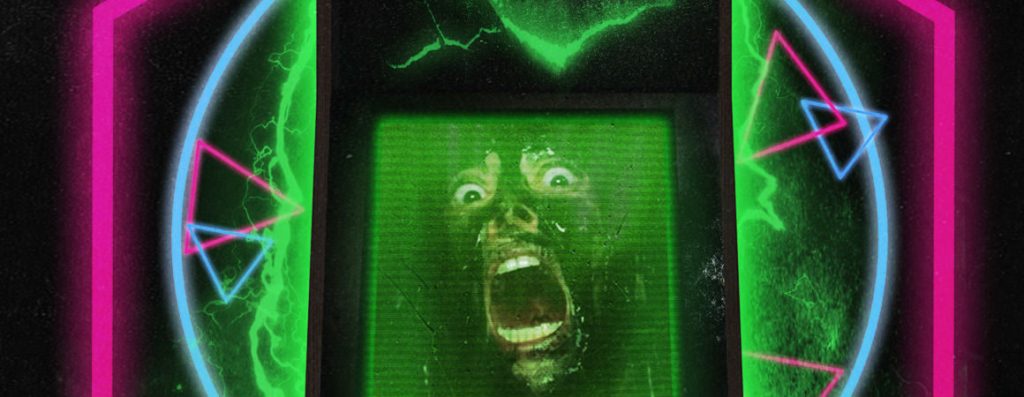
Now here is where I make a confession, the horrifying picture at the top of the article? It’s not from the film I am reviewing here. I’ll give you a second to guess where it came from.
Did you guess the HBO hit series, The Pitt? If so, good job and if not what are you still doing here? Go watch The Pitt and do so now! Why? Every episode is far more shocking than FoD26.
Every. Single. Episode.
And no, I am not being hyperbolic. It is a fact. Take the image above. It comes from the absolutely batshit emergency C-section that I saw the night AFTER watching FoD26. I watched in terror and horror as the doctors carved open a woman and pulled a nearly dead infant from her open womb. Guess which stuck with me long after the credits rolled…
So I say again, this film is just ok. You don’t need to watch it and you aren’t missing out on some great horror flick by passing. If you really want to watch it, wait for FoD26 to show up on TUBI (it will someday) and in the meantime watch The Pitt instead. There are two seasons that will leave you shaken and deeply affected.
On May 31st I went to a 10:20 pm showing of Bring Her Back. Despite the late hour—which would have caused me to at least doze off—I was alert and awake for the whole film. Moreover, since that day I have thought about this film often: the themes, the story, the tragedy and grief and horror on display stuck with me and resonated with me on a deep, deep level. It stirred up emotions and thoughts that I had not realized were logjammed in my emotional state.
The film is grief incarnate, and the story from the get go—a cult committing suicide on fuzzy VHS, kids finding their dead dad—-lets us know that there will not be a happy ending to this. That is ok though because what the filmmakers spend the runtime doing from that point forward created the single most memorable theater experience I had in 2025 (closely followed by the joyfulness brought on by The Toxic Avenger and the Nazi massacre of Silent Night, Deadly Night). Every scene of the film drips with anguish and dread and anxiety as the newly orphaned kids try to navigate the circumstances that they find themselves in. Then the plot adds an incredible supernatural element and we have one of the most effective horror films of the 2020’s and the best film of 2025.
I read a few reviews that critiqued the film for its brutality and intensity, and I read others that claimed the film made no sense. I find both kinds of reviews to be reductive and silly. The brutality was the point, and the film made perfect sense. It was a masterclass in story telling and in cinematography. It was incredibly acted. The sound design was immaculate. The FX were top notch and gnarly. So why was it left out of the awards season?
It is too hard to watch.
It is a legitimately scary movie.
Not since The Exorcist have we had a film that was that hard to watch win an Oscar, a film as bleak as The Exorcist is not going to get a nomination any time soon. Especially not with the political climate being what it is, and so we got the crop of cathartic nominees that we got. I understand why it happened but I hate that it did happen. I mean Sally Hawkins at least should have gotten a nod beyond the Chainsaw Awards from Fangoria.
Her performance was incredible. She haunted my nightmares for weeks after the credits rolled and while I did love Weapons and Sinners I did not have the same reaction to those films that I had to Bring Her Back. I am well aware that my reactions to a film do not merit an Oscar but I suppose that my visceral reaction is what is fueling this article. I had a deeply emotional reaction to this film and I imagine that everyone who watched did too and I think that made everyone very uncomfortable. Uncomfortable films don’t win awards. Films in which everything turns out alright are the ones the Academy wants front and center right now and I can’t say I blame them.
Stay tuned for a massive article that is part review and part rumination on the themes and films of last year, important I think because we are headed into the thick of blockbuster season and there is a dearth of new horror on the way. We should look back to see if the powers that be and the zeitgeist have moved on or if they are still locked into last year’s themes.
The new season of Monarch dropped last week and I am thrilled. I have seen people online speculating that the new season will finally give us what we’ve wanted forever: Godzilla vs Cthulhu! But those people are wrong. What we are getting is even better.
It is Dagon.
Dagon as a kaiju is something that has already been done. In Lovecraft’s story of the same name, In the narrative, a sailor comes across a strange monolith on a strange plain that depicts some gigantic fish man eating a whale. Shortly thereafter, said whale eater (aka Dagon) slips and slithers its way up the monolith:. Here’s how Lovecraft wrote it: “With only a slight churning to mark its rise to the surface, the thing slid into view above the dark waters. Vast, Polyphemus-like, and loathsome, it darted like a stupendous monster of nightmares to the monolith, about which it flung its gigantic scaly arms, the while it bowed its hideous head and gave vent to certain measured sounds.” and Dagon is worshipped by these horrifying fish people and strange abyssal crustaceous things that drove the narrator mad. Here’s Lovecraft again: “I cannot think of the deep sea without shuddering at the nameless things that may at this very moment be crawling and floundering on its slimy bed, worshipping their ancient stone idols and carving their own detestable likenesses on submarine obelisks of water-soaked granite. I dream of a day when they may rise above the billows to drag down in their reeking talons the remnants of puny, war-exhausted mankind—of a day when the land shall sink, and the dark ocean floor shall ascend amidst universal pandemonium.” The idea of this happening is so dreadful to the narrator that he decides that as soon as the opium wears off, he’s killing himself. The story ends on a bit of a ridiculous cliffhanger as the narrator writes about a monster trying to break in as the monster is trying to break in, kind of like the live tweeting your own murder sequence in Scream Queens.
Fast forward and Lovecraft revisits the idea of Dagon in the Shadow Over Innsmouth only this time we are treated to a rotting, downtrodden fishing town full of fish folk hybrids because the townsfolk worship—you guessed it—Dagon and the women folk of Innsmouth love themselves some ichthyomorphic peen. There’s a cult in the town, and that cult worships Dagon, and fornicates and cavorts with Dagon, and in return Dagon lavishes the town with gold and nets full of bountiful catches, riches in equal measure. The story tells us about a guy on a journey who stops at Innsmouth, finds out about the cult, and is summarily chased out of town by said cult. It later turns out that our narrator is actually part fishman himself! WOW!
Now take this idea and move it to Spain and you have Stuart Gordon’s take on the tale, a film called Dagon. Gordon tweaks the tale though and we get some good old fashioned giant monster doing giant monster stuff including dragging a beautiful woman into the depths to be his unwilling bride. But still in this film we get a group of Spanish fisherfolk who worship a giant monster, this will become relevant in a moment.
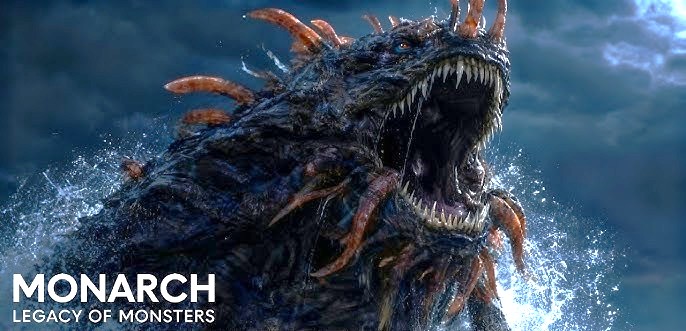
In the new season of Monarch, the group discovers a Spanish fishing village that worships a giant monster that “brings the bounty of the sea” to the village as reward for their faith, which includes hints of human sacrifice. This cult runs the town and keeps their god a secret. Our team has yet to be chased out and hunted by irate fisherfolk but it sure seems headed that way. Meanwhile our introduction to the new big bad kaiju for season two takes place in that weird between place where kaiju come and go and a day is a year on the surface. Shaw witnesses the emergence of this kaiju and what he sees is a mountain walking. Literally, the kaiju was inside a mountain and it shook the majority of the mount off of it when it woke up and head back to Earth. In the Call of Cthulhu Lovecraft describes Cthulhu as a mountain that walks. So there is a clear correlation and homage to Lovecraft and Gordon and Dagon. Even the design of the kaiju itself is clearly Dagon-esque and the beast is accompanied by a host of giant trilobite beasties, much as described by the suicidal narrator of Dagon the story. There is even a cave with a story depicting the god-kaiju and the villagers doing their worship thing! All things point to Monarch doing a Dagon!
So yeah, viewers are about to get a dose of Godzilla vs Dagon and it promises to be the heavy weight match up of the year.
Stay tuned for updates as the season progresses, but here’s hoping this post holds true!
That’s not the name of your new favorite movie*, but it is the name of your new favorite holiday. Taking place the week of the 15th of February, this archaic holy-day was celebrated by a little known sect of ancient Romans which featured all of the trappings mentioned above. Here’s the Encyclopedia Britannica excerpt about the holiday:
“Each Lupercalia began with the sacrifice by the Luperci of goats and a dog, after which two of the Luperci were led to the altar, their foreheads were touched with a bloody knife, and the blood was wiped off withwool dipped in milk; the ritual required that the two young men laugh. The sacrificial feast followed, after which the Luperci cut thongs from the skins of the sacrificial animals and ran in two bands around the Palatine hill, striking with the thongs at any woman who came near them. A blow from the thong was supposed to render a woman fertile. In 494 ce the Christian church under PopeGelasius I appropriated the form of the rite as the Feast of the Purification.”
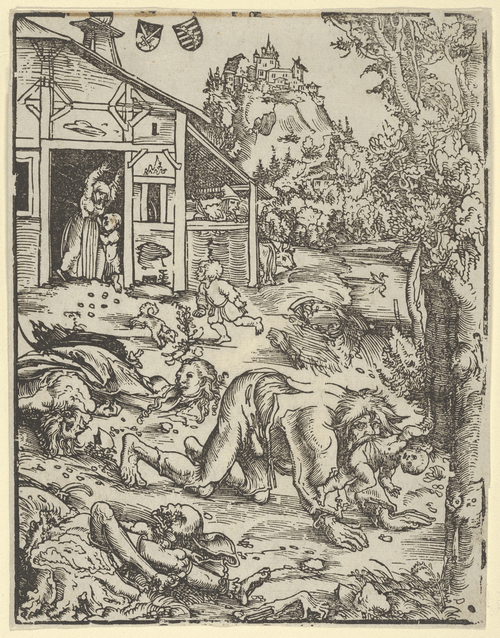
Essentially a bunch of guys known as the order of the Lupeci stripped down sacrificed a goat, bathed themselves in blood, skinned the sacrifice, cut thongs to whip women with, and then—believing themselves to be wolves—went off to terrorize the countryside. The women they whipped were supposed to become fertile as a result of the beating. It is unclear if the women who were whipped also participated in the terrorizing of the countryside or if they were later invited to the inevitable orgy that would go down after all the terrorizing. That more I research older rites, the more I find that orgies were a big part of them, kind of like the key parties of the 70s, the handkerchief code that the LGBT groups used in the 70s and 80s, or the flamingos on the lawn in retirement villages in the aughts, 10s and 20s of the 2000s. Ancient folks really like their anonymous group sex! Odd times, the Dark Ages.
Other, darker stories about the festival have women being caught and whisked away to a cave, the home of the Order of the Lupeci, where wanton acts of sexual depravity occurred under the watchful eye of their god, Lupercus—a being said to both vulpine and cloven all in one. These stories are less willing orgy and moreso tales of rape and sexual assault, and more likely than not were spread by detractors of the pagan rites, but still it is worth noting that these rites often had a darker, more misogynistic bent to them than we often give credence to.
Lupercus was also very interesting. Associated with the great god Pan of the Greek pantheon or Faunus in the Roman tradition, Lupercus was different from both in that he was not just a god of fertility but a protector of farmers, shepherds, and sheep. This god lived in the Lupercal where Romulus and Remus were nursed and raised by a she-wolf, and this cave is where the darker rites mentioned above would take place. I imagine that the shapeshifting nature of Lupercus is what eventually led to the shapeshifting nature of the werewolves that haunted our lore and legends.
This of course ran its course and was co-opted by early Christians as written about above. Valentine’s Day is the newest mutation of the corruption of the Pagan holiday. The trappings of cannibalism and the emphasis on sex all speak directly to the trappings of the original holiday.
That was a joke earlier in this brief piece, that this will be a major motion picture someday but the fact is this HAS been depicted on screen at least once. The Howling (specifically part 2) gave us some crazed werewolf sexy time but the award for best Lupercalia depiction goes to a Halloween classic. Though not a rite performed in February, the finale of Michael Dougherty’s Trick r Treat gives us a fantastic idea of what a werewolf blood orgy might look like: shed skin, fur flying, and blood…so much blood mixed in amongst all the fucking. Hell of a way to go…
So tonight, if you feel an urge to howl at the moon go ahead and give it a go if only to sound the echo of a long ago, long forgotten rite.
Studio 666 is a horror film starring the Foo Fighters as themselves attempting to record their next album. Upon hearing their request for “a new sound” for the album, their agent sets them up at a murder house whose acoustics prove irresistible to Dave Grohl and the band sets up shop. Demonic possession, death and destruction follow in short order.
I’m not here to talk about that stuff though.
I’m here to discuss how the Foo Fighters and their film Studio 666 play the same trick. THe Foo Fighters have been a band for a long time now. Dave Grohl and his crew are long recognized as ambassadors of rock. They have had scandals: Grohl’s child out of wedlock, the shocking death of drummer Taylor Hawkins, but again, this is not an article passing judgement. It is instead an article of appreciation for what the band has achieved. First a confession, I am not an active listener of the Foo Fighter’s music these days. In my teenage years, yes I admit to dabbling but now, in my 40s, I do not actively listen to the band. I don’t hate them, but I would not call them a favorite. I would however drop everything I am doing to see them live. They are an incredible experience live and I highly recommend anyone go see them play. They sneak up on you live. You go in expecting them to sound like the radio versions of their songs, I certainly expected it to be that way; I imagined that they had a greatest hits playlist on an iPad and they’d just play along while the crowd did all the heavy lifting by singing along. That is not at all what happened. Instead we were treated to a rock and roll show, where the songs sounded almost foreign from the album and the greatest hits were sung by Dave Grohl with the earnestness of a person at a karaoke bar giving it their all. It was an incredible and moving experience and one I would gladly seek out a second time, even now with their line-up significantly changed by the loss of Hawkins. The show conveyed and love of and awe for music and it blew me away. Studio 666 plays the same trick. It starts out as what feels like a generic 90s slasher knockoff that takes a left turn into the kind of zany, funhouse horror that best of the 80s and 90s gave us. It takes its time getting there too but in a good way. We get to see the anxiety-ridden, ego-driven mess that is Grohl as he tries to create a new album. To make this album special Grohl wants a sound no one has ever heard before. The demon in the basement of the murder house, once owned by an up and coming thrash metal band called Dream Widow until the lead singer went nuts and murder/suicided the band, offers Grohl exactly what he is asking for. It even offers them up a new song, theirs for the recording as long as they finish it. From there we get an escalating series of gags, heavy on body horror and corn syrup, that lead us to a carnage filled, blood soaked finale that winds up so much darker than I could have anticipated at the light hearted start to the film. It’s a great time and one that goes so much harder than it had any reason to. The budget was put into the practical effects and it shows as each death gets bigger and better and the chances of survival get bleaker and bleaker. I wish I had gotten around to watching a lot sooner, much the same way I regretted not seeing the Foo Fighters until my late 30s. Both are fun experiences and worth checking out.
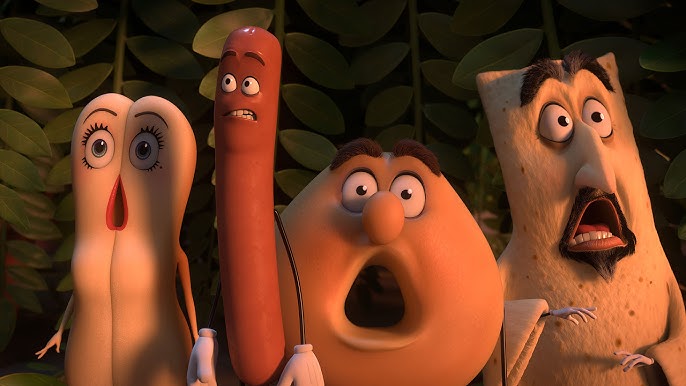
Sausage Party is a Lovecraftian horror film. Yes, you read that correctly. It is a also an R rated comedy animated feature about anthropomorphic food in a supermarket which features the most insensitive and non PC humor I have seen in a film in a long time (honestly, not really since Blazing Saddles has there been a film this non-PC). In short it is a perfect film, if you’re into super raunchy comedies that double as Lovecraftian horror. At this point, now that I have written it twice, you’re probably wondering how is it possible that Sausage Party is Lovecraftian horror.
The basic premise of the film is that these sentient foodstuffs sit around waiting to be chosen by the gods to go to the Great Beyond. Our eponymous hero is selected but things go horribly wrong when a jar of honey mustard, who is stark raving mad after being returned to the store from the Great Beyond, decides to commit suicide rather than face the gods again. From there our hotdog hero, voiced by Seth Rogen, is committed to finding out the true nature of the gods, no matter what that knowledge may end up costing him. There is even a scene where he travels through a frozen wasteland (filled with octopods) to find a book filled with forbidden knowledge. The horrible and horrific truth threatens his existence and the existence of all those he loves, but of course no one believes him until it is too late. Add in mentions of a fourth dimension which is where our food is not food but the anthropomorphic beings we are watching on screen and is only accessible to us (the gods) if we are in an altered state and you have a perfect Lovecraftian comedy. Seriously, this is a great film.
There is a lot more I would love to say about the film, but as always I will avoid spoilers. The things I mentioned above are actually well away from spoiler territory and in fact can be gleaned from watching the trailer. Take a closer look, see this one for yourselves and see how great this film is both as a piece of Lovecraftian film and as a seriously fucked and nonstop comedy. I will warn you though, you discover new depths to your depravity as you watch this film. You may be surprised at what you laugh at (as well as the amount of highbrow, intellectual humor which gets mixed in with the lowbrow stuff in this film).
That is the prevailing theme at the heart and conclusion of my viewing of Graham Skipper’s Sequence Break. It’s in the title of course—and in an onscreen definition, yes, this movie spells out what a sequence break is—but Skipper does a fantastic job building on this theme with other themes and ideas: love, routine, the need for healthy relationships, reach for your dreams, etc. and what we viewers are given a thematically solid, well crafted, Cronenbergian nightmare that is as full of hope and love as it is with moaning fleshy arcade cabinets and wonderful ‘80’s synth score that is absolutely one of the stars of the film. The sound goes a long way to help bring this nightmare to life.
Without spoiling much, if anything, there are two timelines at play here: one where the end result is mind- and soul-crushing imprisonment and enslavement to one’s routine, the same loop playing out over and over again until the world is transmuted and is, at least for our protagonists, destroyed. Then there is the infinite, the out of the box timeline where a butterfly flapping its wings here results in a storm across the world. It is a timeline full of permutations and random chance, and it is only available to a person if they are willing to break… well to break the sequence.
The plot is basic, and that is a good thing. A young man is absorbed in the restoration of old arcade equipment, to the point of total disregard to reality and it spirals from there. You know the cycle: boy is obsessed with one thing, boy meets girls, boy creates crazy lovecraftian/cronenbergian arcade cabinet, boy falls in love (with girl and with the strange erotic, eldritch machine), bad things happen (lots of oooey gooey practical effects here) and then the end of the film comes along. Did the boy choose his love of the woman or the machine*? You will have to watch to find out.
There are a lot of really solid production choices on display here by Skipper. He chose to go largely practical with his effects and that—for me—is to his credit. I love practical effects, and the ones here are top notch, which had me recalling some of the greats as I watched. He clearly wanted a Videodrome feel to this and achieves that aesthetic admirably. My only complaint is that this film was clearly made on a budget, and I wish that Skipper and co had more money to work with which would have given us more and more slimy practical effects. The score is also a lot of fun as it’s full of both throwback retro synth joy.
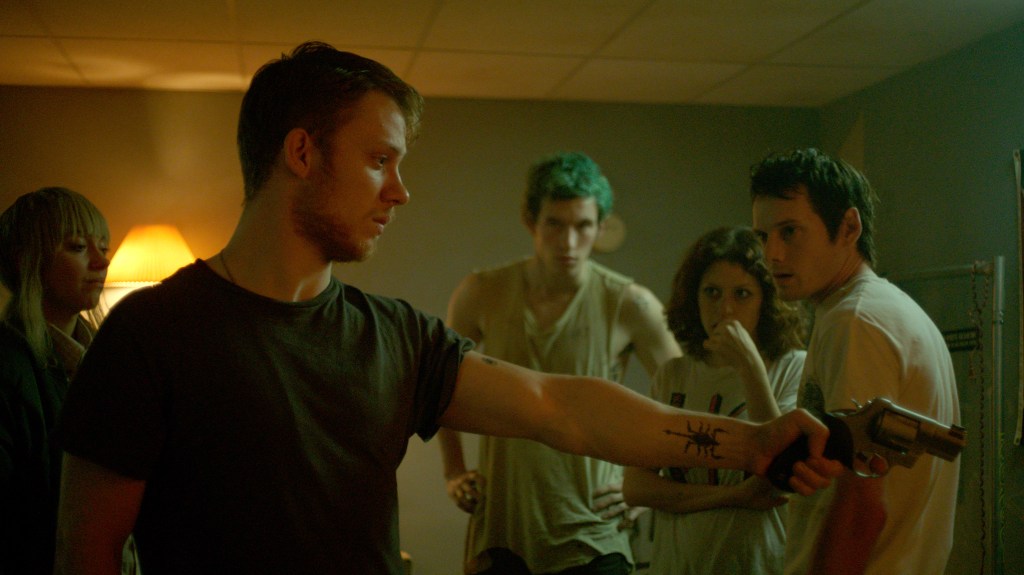
Joe Cole, Callum Turner, Alia Shawkat and Anton Yelchin in Green Room.
The Green Room is a brilliant piece of gripping, in-your-face cinema. This high end splatterfest comes to theaters from the mind of the always incredible Jeremy Saulnier. Focusing on the plight of an obscure punk band who, while performing a show at a dive bar/white supremacist headquarters in the middle of the woods in the Pacific Northwest, find themselves in an awful situation. Early on in the film Saulnier gives us his working thesis: that some experiences are meant to fill you with emotion, to strike a primal chord in the audience and then to be over; leaving you sick and overwhelmed with emotion, the ghostly image of what you were a witness to, a part of, trapped in your subconscious. This is exactly what The Green Room does. After introducing us to the group of likeable punks, who show us that they are not sympathetic to the extreme alt-right agenda of the bar that they are playing at by opening with The Dead Kennedys’ “Nazi Punks F**k Off,” and having us experience the insanity of the crowd as they romp and stomp to the music, Saulnier begins building up the experience as things go horribly wrong for the band. Just like any good concert, and the film really did have the pacing of the best concerts, the intensity and violence ebb and flow, dragging us along to the bloody and well earned denouement.
What most people reading this are wondering, what they are probably only reading this for, is to find out what Patrick Stewart is doing in this film. He plays Darby, the owner of the establishment that the band is trapped in and the leader of the group assaulting them. Stewart plays Darby with cool and calculated consideration and delivers a truly vile character, one that is chilling and terrifying.
I mentioned above that Saulnier has made a splatterfest of a film, and he really has. The gore on display is pitch perfect and brutal but the best part is that it never takes center stage. It is always in the moment and very honest, which sounds strange: “honest gore.” But that is exactly what it is, even at its most shocking the violence on display is never just for shock’s sake, it is earned and it drives the story: either by further tarnishing the souls of our beleaguered protagonists or to drive the story forward with madness and chaos.
This film is one that should be seen, by you and this weekend, in theaters. It is a pure, adrenaline-pumping film, one that will not leave your mind for days to come.